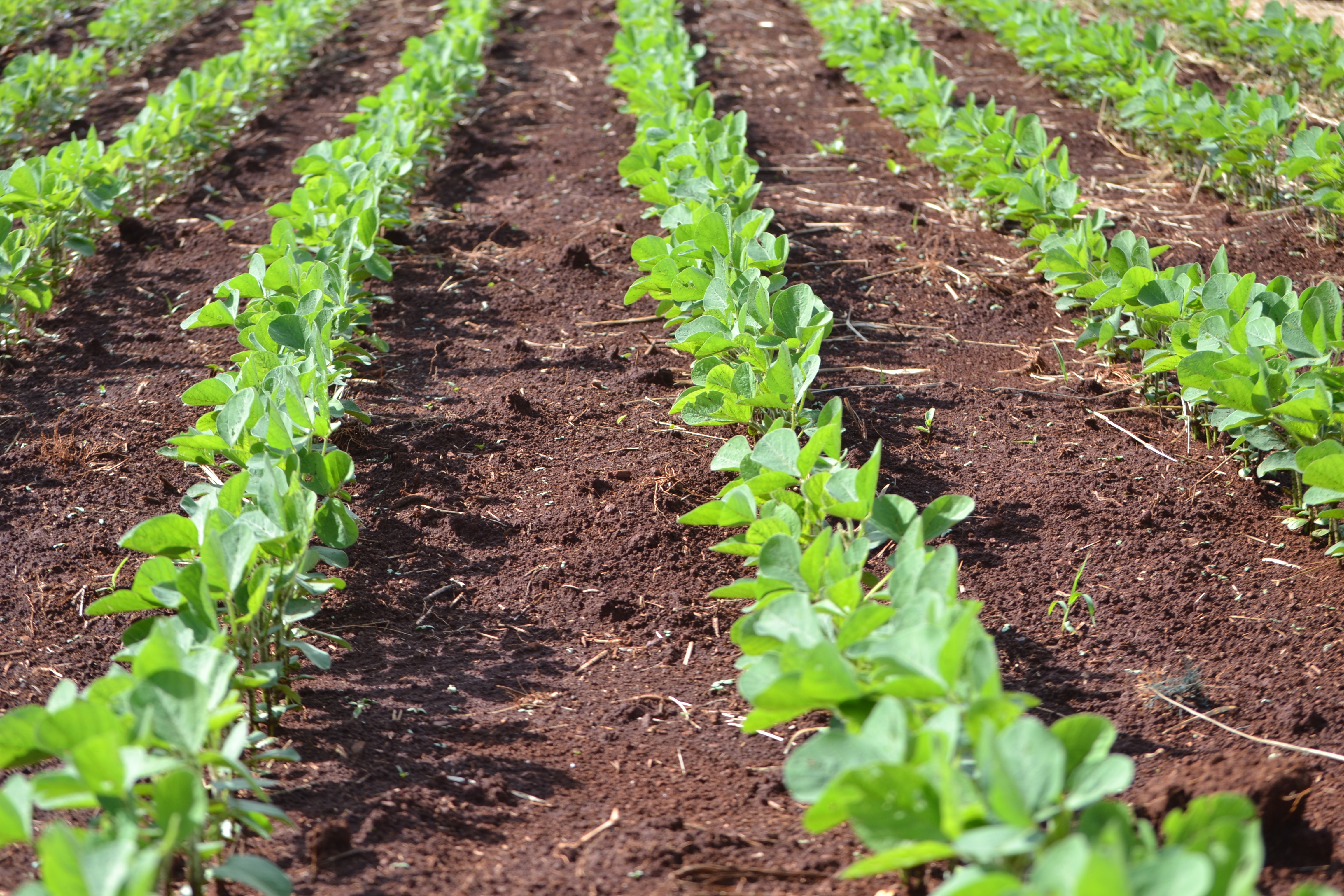

The problem:
The world is thirsty.
The Ogallala Aquifer could run dry in just over 50 – 60 years.
The Colorado River has shrunk by 20% in the past century.
Farmers in Texas are digging up their citrus trees because there’s no rain.
In Spain in 2023 olive tree yields were cut in half due to drought. The year before the Catholic Church resumed praying for rain.
In 2015 in just three states, Washington, Oregon, and Idaho, a drought caused $1 billion in losses.
The cradle of civilization, Iraq, Iran, and Syria, is drying up. It has displaced tens of thousands. Millions are in hunger.
Traditional water sources can no longer be relied upon. Water scarcity ––driven by climate change –– is causing human migration, crop failures, and livestock death. 1 in 9 people in the world suffer from water scarcity. Crops simply cannot grow.
The Question:
In the early Fall of 2022, a farmer approached the University of MN- Duluth’s (UMD) engineering school with a question: Can you pull water from the air using the power of a 12-volt battery? Why a 12 volt battery? They are simple, durable, portable, and ubiquitous.
To answer that question, UMD’s engineering school provided three mechanical and two electrical engineering students, all as part of the senior design program. A year spent a year working on a faulty premise, in particular the summer of 2023 was fruitless. That Fall the University of St. Thomas in St. Paul took up the challenge the focus turned to the refrigeration cycle as the path forward. A custom device was made and testing was done, however little progress was made in finding a complete solution.
It was February of 2025 when Jason and Project Manager / Engineer Nate Capistrant attended the Air Conditioning, Heat and Refrigeration show in Florida. There they got their first breakthrough with meeting a manufacturer who would build a custom device to the team’s specifications. Now, years later, H2O Now has four devices in the pipeline in wide variety of voltages and will being going to market in 2027.
What’s different about H2O Now?
- Small is big: Small, low-cost units can water a consumer-electronics product, built by the millions to satisfy one of the world’s largest needs.
- Portable & shippable: Every unit meets common-carrier size and weight limits. Competitors are bulky and need heavy equipment and specialized power. In other words, our devices are small.
- Plug & play: Installation takes under 1 hour with no special tools. Red wire to positive, black to negative, straight to a battery. Built for outdoors.
- Two water types for global demand: Potable and agricultural.
- Carbon-neutral is built right in. Most of our devices run on solar electricty.
- Full range of voltages, 12, 24, 48 & 110 / 220 AC: Even a 12-volt lead-acid car battery becomes a portable water generator.
What changes?
H2O Now’s approach solves three large status quo constraints in a single device: point-of-need generation, near carbon-free solar operation, and mass-manufacturable cost, a combination nothing else on the horizon delivers. Because it runs on the refrigeration cycle, which factories lean on to build millions of devices annually, costs fall as volume rises. Just as mobile phones skipped landlines and solar skipped the grid, millions of small, low-cost water hubs can skip the pipe.
That means no bottled-water pallets or tanker trucks and none of their cost, labor, or environmental toll. It also means no dependence on pipes, risky wells, or fragile grids; when the grid fails, solar-powered units keep producing. Instead of gambling on a dry hole, farmers can place, move, and add units as their needs grow, taking control of their own water supply.
At scale, the impact is substantial: 10 million units can cover drinking and cooking water for roughly 40 million people, and 100 million units for roughly 400 million. Every unit replaces a contaminated source and a daily water haul, returning health to families and time to the women and girls who carry that burden today.
The Team.
H20 Now works with three engineering schools in two states: The University of Minnesota Duluth, the University of St. Thomas in St. Paul, and the University of Texas-Austin. In addition, there are now two full-time engineers working on the project.